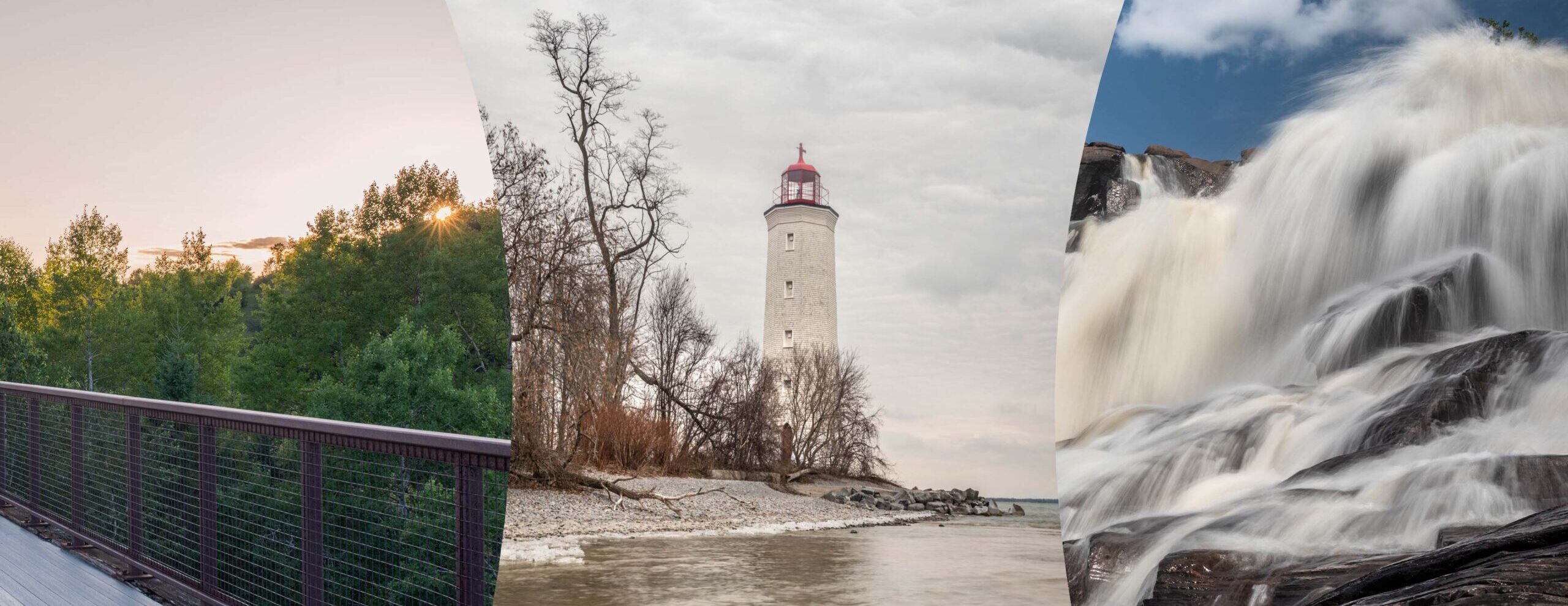
The Ultimate Hiking Guide: Venturing from Borer’s Falls Conservation Area to Rock Chapel Sanctuary
Borer’s Falls Conservation Area parking area hiking into the serene Rock Chapel Sanctuary. This comprehensive trail guide details a stunning route along the famous Bruce Trail, weaving across the majestic Niagara Escarpment in Hamilton, Canada.
Hiking adventures are deeply enriched by exploring the vast, interconnected trail networks of southern Ontario, Canada. Among the most magnificent excursions available to outdoor enthusiasts is the scenic journey that leads deep into the pristine wilderness of the Rock Chapel Sanctuary. It is widely recognized that this particular corridor offers an unparalleled look at the world-renowned Niagara Escarpment, a UNESCO World Biosphere Reserve celebrated for its dramatic cliffs and ancient ecosystems. Beautiful waterfalls, challenging terrains, and rich historical landmarks are discovered by hikers who undertake this specific journey. By beginning your trek at the designated staging point, an unforgettable day of exploration through deep forested gorges and high escarpment lookouts is guaranteed.
Exploring the Natural Wonders of Borer’s Falls Conservation Area and Beyond
Borer’s Falls Conservation Area serves as an exceptional starting point for hikers who are looking to immerse themselves in the distinct geography of Hamilton, Ontario. It is here that the famous Bruce Trail stretches along the edge of the limestone cliffs, providing a direct connection to adjacent protected spaces like the Rock Chapel Sanctuary. A year-round flow of water is maintained within this extensive watershed, making it a critical habitat for diverse plant and animal species. Decades of ecological stewardship have allowed these sensitive lands to remain largely untouched, offering visitors a window into Canada’s rich natural heritage. As you lace up your boots at the parking area, you are stepping directly into a complex web of life that has been protected for generations.
Hiking the Niagara Escarpment: A Premier Ontario Adventure on the Bruce Trail
Discover breathtaking waterfalls and ancient forests along the legendary Bruce Trail corridor.
Every year, thousands of local and international hikers are drawn to the rugged paths of the Niagara Escarpment in Hamilton, Canada. The entire region is heavily defined by its unique geographical features, which include steep vertical drop-offs, deep talus slopes, and stunning curtain-style waterfalls. Consequently, an exceptional variety of hiking trails are maintained across the city, allowing for continuous exploration throughout the changing seasons. The path connecting Borer’s Falls to Rock Chapel is regarded as a true highlight of the Iroquoia section of the Bruce Trail, providing both physical challenges and visual rewards.
Borer’s Falls: A Majestic 15-Metre Curtain Waterfall Running Year-Round
+-------------------------------------------------------------+
|                     ROUTE SUMMARY METRICS                   |
+--------------------------+----------------------------------+
| Starting Point           | Borer's Falls Parking Lot        |
| Destination Area         | Rock Chapel Sanctuary            |
| Primary Trail Network    | Bruce Trail (Main/Side Trails)   |
| Terrain Characteristics  | Rocky paths, steel stairs, flats |
| Notable Highlights       | Borer's Falls, Karst features    |
+--------------------------+----------------------------------+
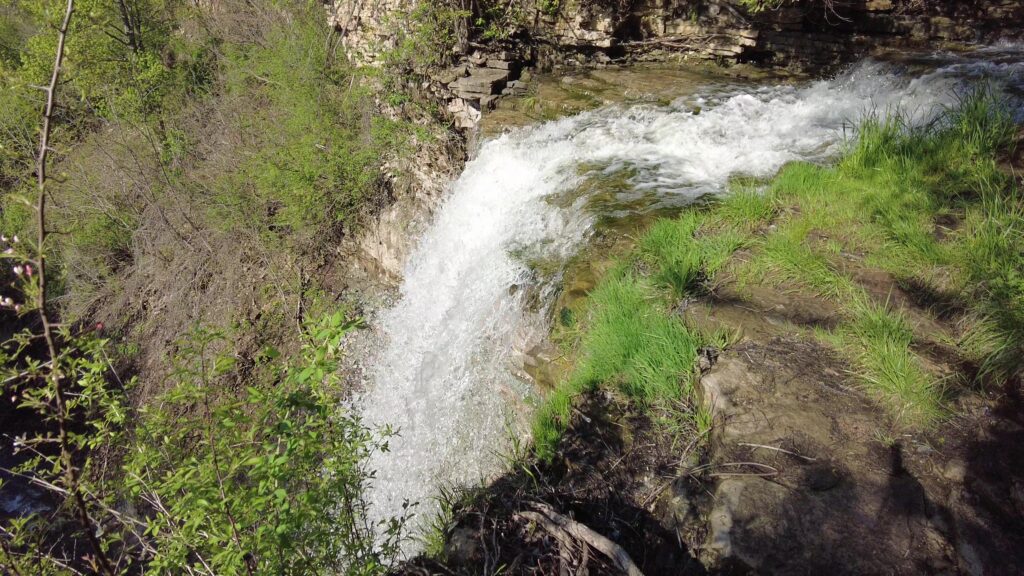
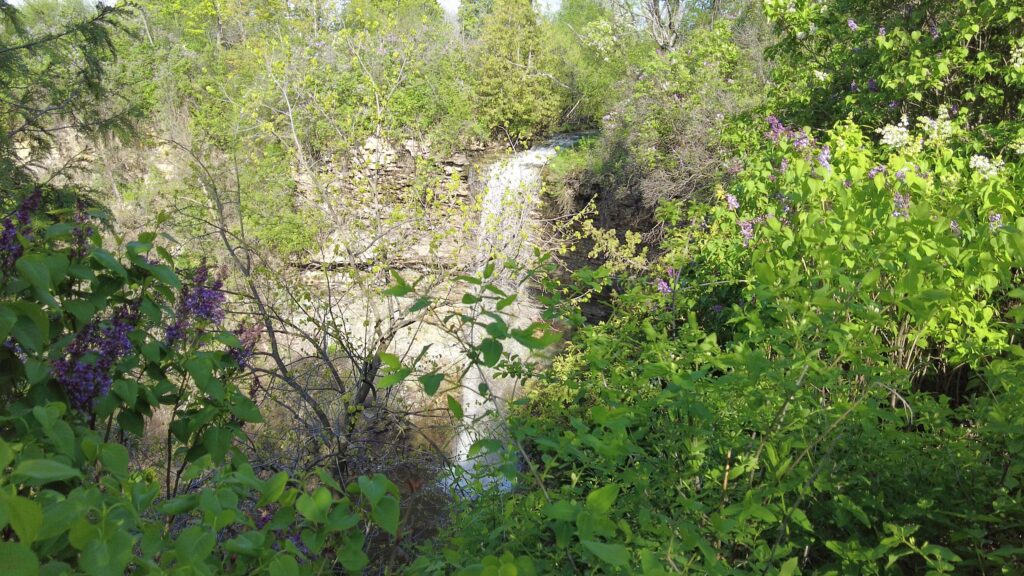
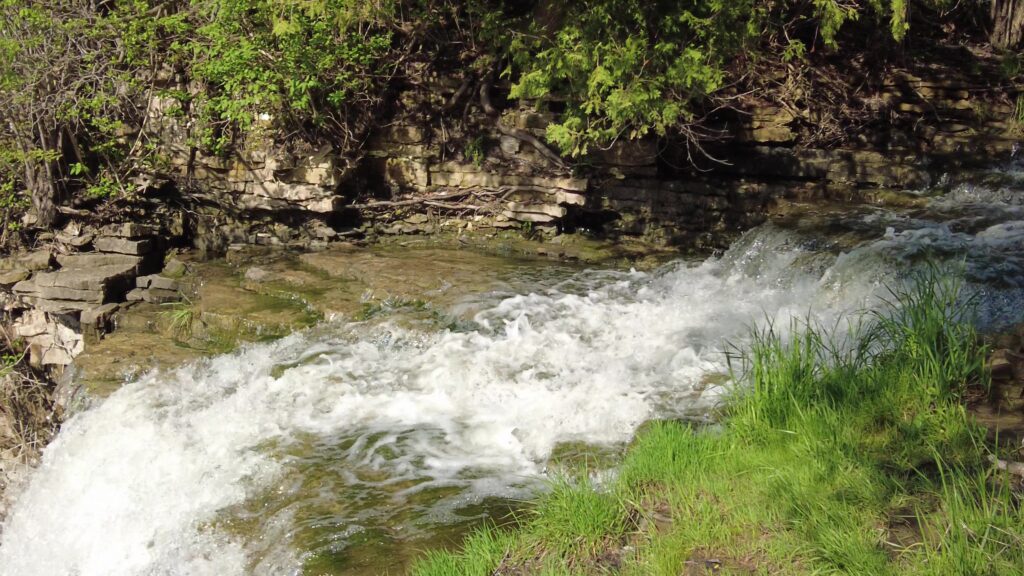
Borer’s Falls is a 15-metre-high curtain style waterfall whose source is nearby Borer’s Creek. It is located at the Borer’s Falls Conservation Area in Dundas, and has a year-round flow. Originally, the rushing waters were used to fuel local industry, though today they serve primarily as an ecological marvel. It is important to note that the waterfall is also known as Rock Chapel Falls, reflecting its dual connection to the historic sanctuaries nearby. Excellent viewpoints are offered from the stone bridge dating back to 1868, where the crest of the falls can be observed safely by visitors.
The Historic Legacy of Rock Chapel Village
Long before modern conservation efforts were established in Ontario, early European settlers recognized the vast energy potential of the local waterways. United Empire Loyalists settled Dundas and the first family to arrive, the Mordens, was granted land in the area. Subsequently, industrial expansion occurred rapidly along the banks of Borer’s Creek as pioneering families built their homes.
Morden House, located next to Borer’s Falls, was built in the 1790s next to the creek that powered their sawmill. Over the next several decades, ownership changed, and the facility was expanded to meet growing agricultural demands. Borer’s Falls, also known as Rock Chapel Falls, powered the Rock Chapel Village sawmill, which was run by the Borer family, for more than a hundred years.
Eventually, significant environmental changes forced the operators to adapt their traditional mechanical methods. When the land was cleared, the creek’s flow was altered to the extent that it was no longer a strong energy source, so the Borers switched to steam power for the mill. This historic transition highlights the early human impact on local watersheds, a lesson that is still studied by modern environmentalists today.
Hamilton’s Postcard-Perfect Waterfall Culture
The city of Hamilton, Canada, is globally recognized as the “Waterfall Capital of the World,” boasting over 120 distinct cascades within its municipal borders. Among these many locations, the scenic gorge at Rock Chapel has long been celebrated as a premier visual destination. Borer’s Falls is one of thirteen Hamilton waterfalls to be regularly featured on postcards during the last 100 years. It is also included in two popular posters: “Waterfalls of Hamilton- Seasons” and “Waterfalls of Hamilton- Autumn.”
These artistic representations have helped to foster a deep sense of pride among community members, while attracting tourists from across North America. Pristine views are still captured by photographers who visit the dedicated lookouts during the vibrant autumn transformation.
       [Borer's Falls Parking Lot]
                   │
                   ▼ (Bruce Trail Access)
         [Borer's Creek Bridge] ───► (View of Borer's Falls Crest)
                   │
                   ▼ (Main Bruce Trail)
         [Escarpment Edge Path]
                   │
                   ▼ (Armstrong Side Trail Loop)
          [Steel Staircase System] ───► (Geology Exhibit & Karst)
                   │
                   ▼
       [Rock Chapel Sanctuary Loop]
The Role of the Hamilton Conservation Authority And Borer’s Falls Conservation Area
Large-scale land management is required to preserve the delicate balance between public recreation and environmental protection along the Niagara Escarpment. Almost 3,031 hectares of Hamilton Conservation Authority owned and managed property is made up of natural conservation areas, and plays a major role in the ecology and health of the HCA’s watershed. These expansive properties are carefully monitored to prevent degradation caused by high foot traffic and urban encroachment.
Furthermore, significant financial investments are directed toward infrastructure maintenance annually. HCA’s natural areas cost about $1,800 per ha per year to maintain (about $5 million in 2010 dollars) and our admission fees go back into our areas. By paying parking fees, essential funds are directly provided by hikers to ensure that trails, boardwalks, and bridges remain safe for future generations.
Our natural areas include:
- Beverly Swamp
- Borer’s Falls
- Crooks’ Hollow
- Devil’s Punchbowl
- Eramosa Karst
- Felker’s Falls
- Fletcher Creek Ecological Preserve
- Iroquoia Heights
- Lower Spencer
- Meadowlands
- Mount Albion
- Tiffany Falls
- Vinemount and Vinemount Wetland
In addition to these individual properties, massive trail corridors are managed by the organization. These include the Chippewa and Hamilton to Brantford Rail Trail and sections of Christie Lake, Dundas Valley, Confederation Beach Park, Spencer Gorge and Westfield Heritage Village.
Understanding Ecological Designations and Sensitivity
The biological diversity found within these protected zones is considered highly unique within the province of Ontario. These lands were acquired and protected by HCA because of their sensitive nature and the overall role they play in the landscape-level natural heritage of the watershed. Directly because of this significance, they are typically designated by the province or the municipality as Provincially Significant Wetlands (PSWs), Environmentally Significant Areas (ESAs), or as Areas of Natural and Scientific Interest (ANSIs).
The actual designation is determined by many reasons, including significant hydrological function, rare habitat, or species at risk, to name a few. For example, ancient White Cedars are found clinging directly to the sheer cliff faces of the gorge. Remarkably, some of these old-growth trees germinated as early as 1601, making them some of the oldest living organisms in all of Canada.
Ecological Warning: Because these habitats are highly sensitive, hikers are strictly required to remain on marked trails. Trampling the surrounding undergrowth can cause permanent damage to rare plant species and accelerate soil erosion along the escarpment edge.
Long-Term Protection and Biodiversity
Securing public ownership of these properties is the most effective method for guaranteeing their survival. Ownership by an organization such as HCA protects these lands from changes that could be detrimental to their sensitive features and functions. These lands contribute to the larger natural heritage system in the City of Hamilton and surrounding municipalities, which allows for the greater protection of the watershed’s overall biodiversity. Without these continuous protections, the unique karst features, disappearing brooks, and wildlife corridors of the Rock Chapel Sanctuary would face severe threats from modern developments.
Detailed Step-by-Step Hiking Route from Borer’s Falls Conservation Area to Rock Chapel
Navigating this specific section of the Bruce Trail is a highly rewarding experience, but a clear understanding of the local path network is required. Safety should always be prioritized, particularly when hiking along exposed cliff edges or wet limestone steps.
Step-by-Step Navigation Sequence
1.Depart from the Parking Area:0.0 km – Initial Setup.
Begin your trek at the primary Borer’s Falls Conservation Area parking lot situated along Rock Chapel Road. Access to the main Bruce Trail is found immediately adjacent to the parking area, marked clearly by iconic white blazes on the trees.
2.Cross the Historic Stone Bridge:0.2 km – Waterfall Viewing.
Follow the white blazes eastward toward the historic stone bridge constructed in 1868. Look down to observe the rushing waters of Borer’s Creek as they prepare to plunge over the 15-metre escarpment crest.
3.Navigate the Escarpment Edge:1.5 km – Scenic Overlooks.
Continue westward along the Escarpment Trail section of the Bruce Trail network. Panoramic views over Cootes Paradise and the distant Dundas valley floor will be encountered frequently along this packed-earth singletrack.
4.Descend the Armstrong Side Trail:2.2 km – Geological Exploration.
Locate the blue-blazed Armstrong Side Trail junction to begin a steep 10-metre descent utilizing the modern steel staircase system. Labeled layers of escarpment rock formations can be safely examined as you descend into the talus slope.
5.Arrive at Rock Chapel Sanctuary:3.0 km – Loop Completion.
Complete the lower loop where unique karst features, including the famous disappearing brook, can be observed firsthand. Return via the main trail to complete your journey back to the initial staging area.
Seasonal Considerations and Essential Gear
Preparation is key when planning an excursion along the Niagara Escarpment. Weather patterns in Ontario can change rapidly, significantly impacting trail conditions within a short period.
- Spring: Earthen paths become exceptionally muddy during the annual spring thaw. Waterproof footwear is highly recommended, and caution must be exercised near swollen creeks.
- Summer: Dense foliage can partially obscure views of the waterfalls, but the deep canopy provides excellent shade. Bug spray and plenty of fresh water are absolute necessities.
- Autumn: This is widely considered the peak season for hiking in Hamilton due to the spectacular color changes. Cool, crisp air makes the steep climbs much more comfortable.
- Winter: Trails are not plowed or sanded during the winter months, leading to icy conditions. Traction aids, such as microspikes, should be worn by anyone attempting the steeper sections.
Conservation Etiquette for Responsible Hikers
To ensure that these areas remain pristine, all visitors must follow low-impact recreation principles. The environmental integrity of the Rock Chapel Sanctuary relies entirely on the cooperation of the public.
- Pack It In, Pack It Out: All garbage, including organic waste like apple cores and banana peels, must be carried back to the parking lot.
- Respect Wildlife: Deer, migratory hawks, and unique bird species are regularly encountered throughout the meadowlands. Keep a respectful distance and never offer food to wild animals.
- Leash Your Pets: Dogs are fully permitted on the Rock Chapel Trail, but they must be kept securely on a leash at all times to protect nesting birds and sensitive flora.
Final Thoughts on This Classic Hamilton Hike
Ultimately, the route from Borer’s Falls Conservation Area to the Rock Chapel Sanctuary represents one of the finest natural experiences available in southern Ontario. It perfectly combines historical interest, geological education, and physical recreation into a single, cohesive journey along the Bruce Trail. By understanding the tireless preservation efforts of the Hamilton Conservation Authority, a deeper appreciation for these unique spaces is developed by every visitor. Whether you are seeking a challenging workout on the escarpment stairs or a peaceful afternoon admiring year-round waterfalls, this classic Canadian trail is guaranteed to deliver an exceptional outdoor experience.
Additional Hiking Resources for Ontario Enthusiasts
To further expand your knowledge of local trail systems, a detailed visual breakdown of the route can be highly beneficial. You can watch an in-depth exploration of this exact trail corridor by visiting this Borer’s Falls Hiking Video. This practical video resource is highly relevant because it shows the exact terrain transitions, parking lot layout, and scenic waterfall lookouts you will encounter when traveling from the Borer’s Falls Conservation Area to the Rock Chapel Sanctuary.
Exploring the majestic paths of Borer’s Falls Conservation Area provides hikers with unparalleled access to the historic Bruce Trail along the Niagara Escarpment in Hamilton, Ontario.
Long-term environmental preservation is successfully achieved through the continuous management of sensitive lands across Canada by the dedicated Hamilton Conservation Authority.
Written By
Tom Worsley
Ontario trail hiker and outdoor photographer
This trail guide is based on first-hand visits and on-site observations documented by Tom Worsley.
View full author bio